Showing posts with label 1970s. Show all posts

Monday, 21 November 2016

Science Fiction-Music Interconnections: The Adventures of Spaceship Hawkwind, starring Robert Calvert and Michael Moorcock

Formed in late-1960s London, Hawkwind were the pioneers of a strand of Progressive Rock known as ‘Space Rock,’ incorporating cosmic themes and musical experimentation in a style which assimilated “repetitive hypnotic beats and electronic/ambient soundscapes.” Their shifting line-up was augmented by the addition of South African-born poet and writer Robert Calvert, who had been involved with street theatre and underground magazines, and occasionally by the English author and editor Michael Moorcock; both shared the same counter-cultural aspirations and background in the Ladbroke Grove/Notting Hill area as the band, and brought literary and particularly science-fictional inspiration to Hawkwind’s sound.

From their first (and only) hit, 1971’s ‘Silver machine’, with lyrics by Calvert, and on the subsequent album In Search of Space, Hawkwind produced otherworldly music and explored science fiction themes, creating the template for a series of ground-breaking albums during the 1970s. In Search of Space and the follow-up album, Doremi Fasol Latido, introduced the ‘Starfarer’ concept, “a loose story line involving the adventures of Spaceship Hawkwind and its eventual crash-landing on Earth.” Calvert functioned as the band’s ‘resident poet,’ giving spoken-word recitals during concerts, composing lyrics and appearing as lead vocalist on record. Favourites on the UK’s then-flourishing free festival circuit, Hawkwind presented an on-stage spectacular with dancers and lightshow to accompany their live performances – captured on 1973’s Space Ritual, regarded as “the ultimate space rock album.” Lavishly packaged, the artwork was by regular associate, graphic artist Barney Bubbles, who also wrote a short sci-fi story of Spaceship Hawkwind for the performance programme, building on their existing overall Starfarer concept of the band travelling through time and space. Calvert’s manic-depressive condition and the demands of touring took their toll, and he drifted in and out of the line-up, his role on stage and as lyricist intermittently filled by his friend Michael Moorcock as a self-confessed “understudy,” who contributed ‘The Black Corridor’ (adapted from his own 1969 novel) and ‘Sonic Attack’ to Space Ritual.


Hawkwind - Space RitualHawkwind - In Search of Space


A prolific author and, from 1964, editor of the magazine New Worlds – where he had published some of Calvert’s poetry – Moorcock found acclaim with the Cornelius Quartet of novels, following the weird and wonderful adventures of central character, Jerry Cornelius, a psychedelic harlequin-secret agent, an anti-hero of the times, picking his way through the debris of ‘swinging London’ and all points beyond. The first of the novels, 1968’s The Final Programme, was filmed in 1973 (though the result was much to the author’s disapproval); Mick Jagger was reputedly approached to play the lead, only to decline the Cornelius role as ‘too freaky.’ The Jagger connection was not coincidental – amongst other endeavours, Cornelius fronts a pop group known as the Deep Fix, a name Moorcock used in turn for his own musical project when he came to record the 1975 Concept Album The New Worlds Fair. In the same year he contributed lyrics to, and was credited as the originator of, Hawkwind’s album Warrior on the Edge of Time – based on his concept of the Eternal Champion, a recurring character found in different guises throughout his work, including Jerry Cornelius. The connection between author and group was further cemented by a series of dubious genre novels attributed to Moorcock and Michael Butterworth (though primarily the work of the latter, Moorcock’s name guaranteed respectable sales), beginning with Time of the Hawklords in 1976, featuring the band as protagonists in a series of sci-fi-inspired adventures.


Michael Moorcock - the Cornelius ChroniclesMichael Moorcock & The Deep Fix - The New Worlds Fair


Hawkwind - Warrior on the Edge of TimeMichael Moorcock & Michael Butterworth - Time of the Hawklords


Once Robert Calvert took the helm on a more permanent basis as lead singer and songwriter in 1976, he oversaw a shift in Hawkwind’s conceptual concerns. Their later-70s output focused more on dystopian and futuristic themes, closer in spirit to the contemporary work of J. G. Ballard than the fantasy territory they had previously explored, in keeping with Calvert’s experimental solo albums. This phase began with Astounding Sounds, Amazing Music (referencing the classic magazines of early science fiction), continued with 1977’s acclaimed Quark Strangeness and Charm and culminated in their final album of the decade, PXR-5, the last to feature Calvert, and released after his departure from the band. Calvert and Moorcock (whose versatility saw him expertly turn his hand to any style within – and occasionally outside – the sci-fi genre) had similar preoccupations, and while Calvert was a captivating, at times eccentric and flamboyant front-man, the pair’s work is complementary. After Calvert left to pursue his own projects, Moorcock continued to perform with Hawkwind on a regular basis and worked with them throughout the 1980s, notably on the albums Sonic Attack and Chronicle of the Black Sword, “all but one of whose songs are based on his Elric saga (the other, ‘Needle Gun’ is about Jerry Cornelius).”

Hawkwind - Astounding Sounds, Amazing MusicHawkwind - Quark Strangeness and Charm


Whilst Robert Calvert sadly died in 1988, Michael Moorcock remains a celebrated and successful author; a variety of splinter groups featuring original or one-time members of Hawkwind (including founders Dave Brock and Nik Turner) continue to tour the UK and world-wide, under a number of related band names. In their various incarnations they are recognised as innovators and prime exponents of a distinctive and enduring style, an influential and widely-respected group whose admirers include such diverse musical figures as Jello Biafra, Julian Cope, John Lydon and Henry Rollins.


Hawklords Tour November 2016

Tuesday, 30 August 2016

Science Fiction-Music Interconnections: A Brief Survey of the Seventies, Part Two

II. The Concept Album

The ambitious scope of Rock – as opposed to disposable, chart-friendly Pop – grew in the later sixties from its commercially-driven origins and gradually became the province of Serious Artists, many of whom turned to works inspired by, or adapted, from the rich field of science fiction literature. Accordingly by the early seventies, the album, rather than the single, was firmly established as the ideal vehicle for such explorations. These musicians were often keen to promote the source of their conceptual material, drawing on classic pioneering works by Jules Verne and H.G. Wells and the later speculations of Isaac Asimov amongst others, whilst George Orwell’s Nineteen Eighty-Four remained a staple across musical genres. Thus was born the science fiction Concept Album.

A notable example of literary inspiration is found in Rush’s 2112 – one side of this 1976 album details an anonymous protagonist’s struggle against the Priests of the Temples of Syrinx, guardians of a totalitarian regime suppressing individual thought in the interests of a “Brotherhood of Man” with the aid of their “great computers.” Located in “the bleakness of Megadon,” one of the planets of the Solar Federation, this epic is by the band’s own admission indebted to Ayn Rand’s novella Anthem, and continues to excite debate about its true meaning.


Of the direct adaptations and interpretations of science fiction works, Rick Wakeman’s undertaking of a musical rendering of Jules Verne’s Journey to the Centre of the Earth; was one of the more ambitious. No stranger to the grandiose gesture (this 1974 album was sandwiched by his historical epics The Six Wives of Henry VIII and The Myths and Legends of King Arthur and the Round Table), Wakeman partly self-financed the project, enlisting cult actor David Hemmings (star of Blow-up and Profondo Rosso) as narrator. Recorded with the London Symphony Orchestra and English Chamber Choir, in its combination of what Rolling Stone described as “pageantry and pretentiousness,” it epitomises a strand of seventies progressive rock which teetered on the edge of bombast and lays itself open to ridicule. Wakeman later revisited the project on its twenty-fifth anniversary in Return to the Centre of the Earth, this time narrated by Patrick Stewart of Star Trek fame. The latter effort followed his own idiosyncratic take on Nineteen Eighty-Four as concept album, with lyrics contributed by Tim Rice.


H.G. Wells’ The War of the Worlds, as one of modern science fiction’s seminal texts, had already proven influential in a series of re-interpretations, notably the 1938 radio play adapted by Orson Welles, which reputedly convinced a substantial number of American listeners that the Martians really had landed. Composer Jeff Wayne went one better than Rick Wakeman, though, by securing the services of Richard Burton as Narrator, and then-popular artists Julie Covington, David Essex, Justin Hayward and Phil Lynott to record individual songs for his double-album musical interpretation. Its success was immediate, and enduring. Prescient as he was, even Wells surely couldn’t have envisaged The War of the Worlds continuing to be staged in the twenty-first century, in an extravagant theatrical production with a hologram of Burton narrating from beyond the grave...


Following a debut album, Tales of Mystery and Imagination, re-telling selected works of Edgar Allen Poe, in 1977 the Alan Parsons Project chose to tackle Isaac Asimov’s I, Robot stories. Song-writer Eric Woolfson spoke to Asimov, and found him to be “extremely friendly and enthusiastic about the idea.” Intending to explore the inter-woven narrative of the nine stories in detail, the band discovered that the rights had already been sold for film/television production (although nothing materialised until a 2004 film only loosely connected to Asimov’s originals). With the title’s comma also removed for legal reasons, I Robot the album instead covered more generic themes of man’s tendency to act in robotic fashion “as well as the dangers of uncontrolled development of artificial intelligence.” Its cover depicts the band at Charles De Gaulle Airport, then representing the cutting-edge of futuristic architecture, overlaid with a painted ‘robotic brain.’ Their 1982 album, Eye in the Sky, whilst a title shared with an early Philip K. Dick novel, was another in the long line of albums inspired by Orwell’s Nineteen Eighty-Four.


The seventies saw the heyday of the Concept Album; by the end of the decade, changing tastes and ever-fickle fashion decreed that the lofty ambition to marry art forms via the long-playing record was not only folly, but terminally uncool (perhaps especially so if it incorporated science fiction). The idea of literary inspiration was condemned as pretentious in an era when virtuouso musicianship could be safely scorned. Names such as Rick Wakeman and the Alan Parsons Project became bywords for the outmoded pomposity of progressive rock (while Jeff Wayne simply slipped into obscurity). Many years would pass before the first signs of cautious critical re-appraisal - if not yet full rehabilitation - of the Concept Album could be detected.

Sunday, 24 January 2016

Science Fiction-Music Interconnections: A Brief Survey of the Seventies

I. Following on from the 1960s, with its space race themes and craze for all that was cosmic and mind-expanding, both David Bowie and Pink Floyd carried their pioneering work into the next decade, to great acclaim. The 1970s also saw the totalitarian state-surveillance vision of George Orwell’s 1949 novel of the nightmare near future, Nineteen Eighty-Four, provide a topical musical theme for a number of artists.


In any discussion of science fiction-related popular music of the 1970s, David Bowie looms large; on the fringes of the ‘Sixties Scene’, it was 1969’s ‘Space Oddity’ which first brought him widespread attention. That song proved to be the first of several successful forays into the field of science fiction – notably Ziggy Stardust and the Spiders from Mars, as an album and concept (but not a Concept Album) – encompassing themes which run through the decade. Prime examples include his 1970 album The Man Who Sold the World, an acting role in The Man Who Fell to Earth, his incarnation as Aladdin Sane and the dystopian Diamond Dogs album. The latter grew from Bowie’s original intention to produce a theatrical version of George Orwell’s Nineteen Eighty-Four, which was stymied when the author’s estate refused to grant permission; the songs ‘1984’ and ‘Big Brother’ were incorporated as part of the album. Whilst his musical and thematic content evolved over the decade, echoes of this interest in science fiction surfaced in the later, experimental albums Low (whose cover is a still of Bowie as The Man Who Fell to Earth and which contains material originally composed for the film’s soundtrack) and 1978’s ‘Heroes’ – specifically in lyrics to songs such as ‘Sons of the Silent Age.’ Bowie even revisited ‘Space Oddity’ and the saga of Major Tom at the dawn of the 1980s, in ‘Ashes to Ashes,’ complete with its ground-breaking promotional video.


Pink Floyd had emerged as a major attraction of London’s UFO Club with their live performances in the late 1960s and, as befitted the times, their early albums showcased a cosmic preoccupation in titles such as ‘Interstellar Overdrive,’ A Saucerful of Secrets and ‘Set the Controls for the Heart of the Sun,’ alongside the fairy-tale whimsy of wayward song-writer Syd Barrett. After Barrett’s untimely departure from the group, their albums became arguably more serious, and indeed better-selling, tracing a trajectory to perhaps their signature work, 1973’s The Dark Side of the Moon, credited with transforming Pink Floyd “from ambitious art-house hipsters to international superstars, while influencing virtually every rock band of the past forty years.” Differing theories have been attached to the iconic prism cover art, and the various poster and sticker inserts contained within the album’s gatefold sleeve; however its designer Storm Thorgerson stated simply that “it related mostly to a light show. They hadn’t really celebrated their light show.”

UFO Club Poster featuring Pink Floyd, 1967; The Dark Side of the Moon album cover, 1973


Before and after Bowie’s abortive stage musical, Nineteen Eighty-Four has proved to exert a persistent influence on musicians. The omnipresent “plexi-plastic eyeballs of your special friends” in the California-based band Spirit’s somewhat hazy 1970 homage to Orwell, ‘1984’ crudely conveys the notion of police-state surveillance with the ominous reminder that “you’re never out of their sight.” It was a fruitful theme for well-established artists in the following years; Stevie Wonder included ‘Big Brother’ on his 1972 album Talking Book, which opens “your name is Big Brother; you say that you're watching me on the telly.” Himself being watched by the FBI, John Lennon’s 1973 song ‘Only People’ features the line “we don’t want no Big Brother scene...” The Jam and the Dead Kennedys both incorporated allusions to Nineteen Eighty-Four into their own ‘protest songs’ of the later 1970s. The references have only proliferated in the decades since; despite the passing of the date itself, bands have continued to draw musical inspiration from the novel.


Wednesday, 14 January 2015

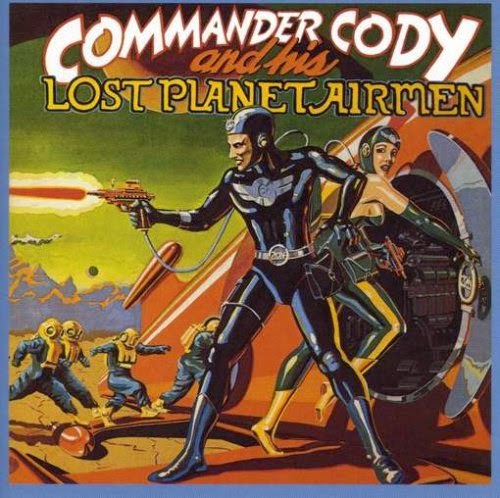
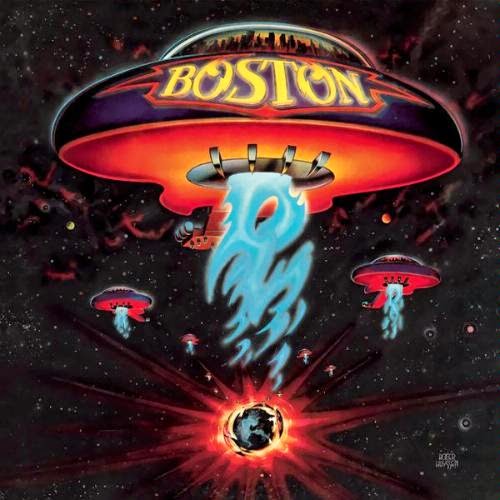
Science Fiction-Music Interconnections: 1970s Spaced-out Album Covers

A Journey through Space and Time in 10 Cosmic Album Covers of the 1970s.

A personal, but by no means exhaustive, selection – in chronological order:


From Germany, Tangerine Dream - Alpha Centauri (71)

From Germany, Tangerine Dream - Zeit (72)


From the UK, Pink Floyd - Dark Side of the Moon (73)


From Germany, Can - Soon over Babaluma (74)


From the US, Commander Cody and His Lost Planet Airmen (75)


From Japan, Far East Family Band - Parallel World (76)
 

From the US, Boston [first album] (76)
 

From Canada, Rush - 2112 (76)
 

From the UK, E.L.O. - Out of the Blue (77)
 

From France, Jean-Luc Ponty - Cosmic Messenger (78)