Showing posts with label music. Show all posts

Wednesday, 14 January 2015

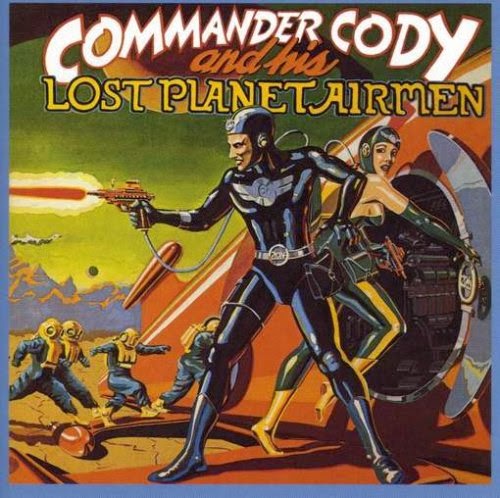
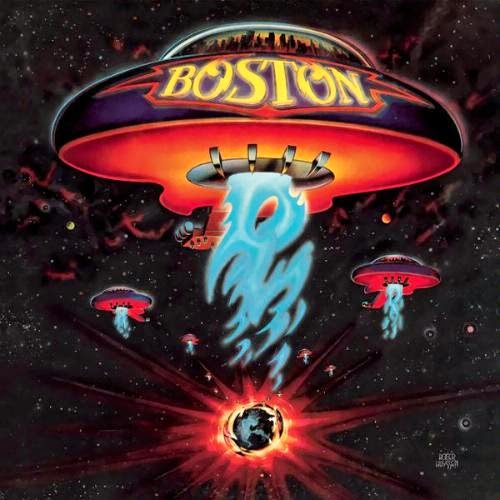
Science Fiction-Music Interconnections: 1970s Spaced-out Album Covers

A Journey through Space and Time in 10 Cosmic Album Covers of the 1970s.

A personal, but by no means exhaustive, selection – in chronological order:


From Germany, Tangerine Dream - Alpha Centauri (71)

From Germany, Tangerine Dream - Zeit (72)


From the UK, Pink Floyd - Dark Side of the Moon (73)


From Germany, Can - Soon over Babaluma (74)


From the US, Commander Cody and His Lost Planet Airmen (75)


From Japan, Far East Family Band - Parallel World (76)
 

From the US, Boston [first album] (76)
 

From Canada, Rush - 2112 (76)
 

From the UK, E.L.O. - Out of the Blue (77)
 

From France, Jean-Luc Ponty - Cosmic Messenger (78)

Monday, 28 April 2014

Interconnections: From William Burroughs to Steely Dan to William Gibson (Part Two)

Two


Burroughs had his own career as a recording artist, releasing a series of spoken-word albums; his first official LP, in 1965, produced at and issued by the English Bookshop in Paris (42, rue de Seine on the Left Bank), was Call Me Burroughs. The Beatles apparently all had copies of the record, as well as art dealer Robert Fraser and members of the Rolling Stones. He also experimented with tape ‘cut-ups’ in much the same way as his writing – the recordings he made with Ian Sommerville in London were eventually released as Break through in Grey Room in 1986. 1990 saw the acclaimed release of Dead City Radio, an album which served as a musical vehicle for Burroughs’ spoken words; the following year, the film version of Naked Lunch, directed by David Cronenberg, helped to consolidate his relevance to a new generation. Throughout his career, he regarded collaboration as an essential part of the creative process; he later worked with artists such as Laurie Anderson, Kurt Cobain, R.E.M., Patti Smith, Tom Waits and also, appropriately, Donald Fagen of Steely Dan. Sonic Youth paid overt homage in a series of albums, and were among those to visit Burroughs at his home in Lawrence, Kansas (in 1993). 

An American writer based in Canada, William Gibson’s 1984 novel Neuromancer popularised the science fiction ‘Cyberpunk’ sub-genre [1], marked by a fascination with technology. Gibson has confessed that “I had to teach myself not to write too much like Burroughs”, though his own work remains highly acclaimed and influential. His novels are also known for their frequent allusions to Steely Dan, a band whose name was itself taken from Naked Lunch. While suggesting the use of the name shouldn’t be taken too literally, Donald Fagen conceded that “we have certainly picked up on some of his world view. I admire Burroughs a lot.” 

Gibson has described Steely Dan’s music as “among the most genuinely subversive oeuvres in late 20th-century pop”. Direct references to their songs in his work include Barrytown (a location), The Gentleman Loser (a bar), Here at the Western World (another bar), and Klaus and the Rooster (characters). Steely Dan, formed in New York, were ostensibly a conventional seventies soft-rock act. They were nonetheless labelled “the perfect musical antiheroes for the Seventies” by Rolling Stone magazine – possibly owing to the sometimes sinister effect of their cryptic, often obscure lyrics hidden within smooth jazz-rock arrangements, suggesting subversive intent; according to Danny Weizmann (in Too Cool), they “pushed the most potent lyric pills since mid-Dyl[an].” 

Gibson is an outwardly conventional figure in appearance (as Burroughs was); he is an innovator in terms of ideas, if not language. The last twenty years particularly have seen him moving beyond traditional sci-fi in a series of novels exploring what happens to humanity in an increasingly technologically-dominated society, tackling the nature of ‘virtual reality’ and the role of the Internet in shaping the modern world, addressing the insidious nature of corporate advertising and branding. Gibson investigates the implications for the very near future, in effect commenting on contemporary life; in this respect he shares an affinity with English author J.G. Ballard, another admirer of Burroughs, who also moved beyond the conventions of science fiction. Gibson’s work has been characterised by critic John Clute as “SF for the new century.” Whilst the Steely Dan references have lessened in recent years, he still titled his 1999 novel All Tomorrow’s Parties, a nod to Lou Reed, the Velvet Underground and their counter-cultural legacy. That book also featured a mysterious character known as the ‘Tao man’, who Gibson has explained as “some sort of avatar connected to the late William Burroughs. An unconscious expression of Burroughsness.”

However, there is always a flip-side to these rich interconnections: Billy Idol paid a dubious homage to Gibson with his 1993 Cyberpunk album, featuring a track entitled ‘Neuromancer’; an enterprise mildly described by Gibson as “very silly.” Also preferably ignored are the subsequent adoption of Deacon Blues (a dire 1980s band appropriating a Steely Dan song title), and The Wild Boys (another Burroughs title and, extending the connection, dismal Duran Duran hit; a group whose own name derived from the 1968 science fiction film Barbarella). In his later years, all manner of unlikely musicians, without any obvious connection to him or signs of influence, began to see a Burroughs photo-opportunity as an ideal means of establishing their own counter-cultural credentials – chief among them Sting and the ubiquitous Bono. While the music of Steely Dan and the novels of William Gibson have a devoted following, they are essentially cult interests. Despite the avant-garde origins and often challenging nature of his work, it is Burroughs who has permeated popular culture, for better or worse.


The influences and the influenced: Call Me Burroughs (Original Cover Design: Tientje Louw, Cover Photo: Harriet Crowther); Neuromancer (Front Cover Illustration by Steve Crisp); Cyberpunk (Cover Art by Mark Frauenfelder)


[1] OED definition: A genre of science fiction set in a lawless subculture of an oppressive society dominated by computer technology; it has been said that “without Naked Lunch there would probably be no cyberpunk” (Richard Kadrey and Larry McCaffery, Storming the Reality Studio: A Casebook of Cyberpunk and Postmodern Fiction, 1991)

Thursday, 3 April 2014

Interconnections: From William Burroughs to Steely Dan to William Gibson (Part One)

Introduction


The novels of William S. Burroughs, notably the notorious Naked Lunch, written in the late 1950s and early 1960s, have exerted a disproportionate influence on counter-cultural artists, authors, film-makers, and musicians over subsequent decades. Among those influenced by Burroughs are the 1970s pop group Steely Dan, who took their name from a rubber appendage in Naked Lunch; it is possible to trace a line through that band to contemporary science fiction author William Gibson in the 1980s and 90s, a writer known for references to Steely Dan lyrics in his work. It is but one instance of the continued relevance of Burroughs in cultural life, a legacy primarily illustrated through the medium of popular music.

One

“It is a book unlike any other. Famous, infamous, derided, and banned but also recognised as a work of genius. For fifty years, it has tantalized, shocked, baffled, and inspired. It simultaneously holds a significant place in postmodern literature while retaining its iconic, underground allure, resisting diverse critical attempts to define and explain it. It is an aberrant concoction, stylistically brilliant and structurally disorientating, obscene and blasphemous and yet satirically cathartic and redemptive.”

[Oliver Harris and Ian MacFadyen, Preface to Naked Lunch @ 50: anniversary essays, 2009]

Burroughs came to prominence in parallel with the Beat Generation [1], which he described as a “sociological movement… a cultural revolution”, and is often cited as Godfather and Mentor of the Beats (though a reluctant pioneer himself, never keen on being allied with any group or cause). His reputation was forged with Naked Lunch, published in 1959, which completes the seminal trilogy of Beat works (after Allen Ginsberg’s Howl and Jack Kerouac’s On the Road). His work has become a byword for the transgressive in modern literature; his status as an iconoclastic figure was recognised in his appearance on the cover of the Beatles’ Sgt Pepper in 1967, together with numerous major cultural figures. He is credited with introducing the terms ‘Blade Runner’ and ‘heavy metal’ to popular culture – in The Soft Machine, the character Uranian Willy is described as “the Heavy Metal Kid” – a reference initially taken up by the band Steppenwolf, which came to be used for an entire musical genre.

Whilst acknowledging that many readers would find it ‘disgusting’, contemporary critic Mary McCarthy declared in her New York Times review that the almost-plotless Naked Lunch “must be the first space novel, the first serious piece of science fiction.” Avant-garde and experimental it may have been, but many readers must have been not only ‘disgusted’, but thoroughly confused, “as Burroughs's alter-ego William Lee and a shifting cast of protagonists drift in and out of heroin-laced visions of scoring drugs, sexual obsession and degradation, bizarre political plots, and even stranger medical experiments.”

Naked Lunch (whose title was suggested by Kerouac) can be seen as a synthesis of Burroughs’ myriad interests: philosophy, science, language, consciousness, mind travel, altered states and pharmacology. Recognised as a radical, subversive artistic statement, the book was subjected to censorship and faced charges of obscenity (it was banned after a trial in Boston in 1962, a verdict overturned four years later); it repulsed mainstream western society – read as a reaction against its values – challenging the use of language as a means of political, sexual and social control. For Burroughs biographer Barry Miles, it remains “a devastating attack on the hypocrisy, greed, racism, addiction to power and mindless suburban consumerism of the postwar American way of life.”

The origins of Burroughs’ pioneering works lie with Brion Gysin, a British-Canadian poet and painter, and his invention of the cut-up technique – using random juxtapositions of text which are literally cut into pieces and re-assembled. This was adopted by Burroughs when the two were living at the Beat Hotel, Paris (9 rue Gît-le-Coeur, in the Latin Quarter) in the 1950s; he acknowledged Gysin as “the first to create cut-ups.” Burroughs had been attempting to edit Naked Lunch for several years, and finally completed it using this technique. Each of the cut-up novels which followed Naked LunchThe Soft Machine, The Ticket That Exploded, Nova Express – proved especially influential; David Bowie has by his own admission made use of the method in his lyric writing. Another musician active in New York in the mid-to-late 1970s, David Byrne of Talking Heads, has described the cut-up technique as a means of “achieving a freedom from the strictures of conventional language and thought”.


Naked Lunch & Soft Machine UK Corgi covers, courtesy of www.beatbookcovers.com

1960s Canterbury-based band The Soft Machine – whose leader, Daevid Allen, had lived at the Beat Hotel – became one of the first Burroughs-inspired names for musical groups, a list which may have begun with the Mugwumps in New York in the early 1960s, and later included Nova Mob and Thin White Rope in the 1980s and 90s. The Velvet Underground are one of several bands to acknowledge the influence of Burroughs, the subject of their 1970 song ‘Lonesome Cowboy Bill’; their songwriter Lou Reed said that “Burroughs alone made us pay attention to the realities of contemporary life and gave us the energy to explore the psyche without a filter.” An early instance of lyrical inspiration drawn from Burroughs can be found in the 1970 film Performance, where Mick Jagger’s ‘Memo from Turner’ includes the line “the man who squats behind the man who works the Soft Machine”.

With his transgressive fiction and anti-authoritarian stance, Burroughs is regarded as a significant influence on punk – during the 1970s he lived close to its major venues in New York’s Bowery district, CBGBs and Max’s Kansas City, where he could often be found, and wrote a column for rock magazine Crawdaddy. Several musicians active in that scene took inspiration from the work of Burroughs – for example, both Iggy Pop (explicitly in his song ‘Gimme Some Skin’) and Patti Smith (in her debut album Horses). In addition, the lyric of Iggy Pop’s ‘Lust for Life’ has its source in the ‘operation rewrite’ section of Burroughs’ novel The Ticket That Exploded – the character of Johnny Yen, strip teases, torture films and “hypnotising chickens” can all be found here. His enduring influence extended to the UK in the same period, where it can also be located in Joy Division’s 1979 song ‘Interzone’ – the imagined setting of Naked Lunch – which also became the title of a respected British science fiction magazine founded in the early 1980s [a publication whose Leeds origins will be explored in a future post].

[1] OED: a movement of young people in the 1950s and early 1960s who rejected conventional society, valuing self-expression and favouring modern jazz. Wikipedia: Central elements of “Beat” culture included rejection of received standards, innovations in style, experimentation with drugs, alternative sexualities, an interest in Eastern religion, a rejection of materialism, and explicit portrayals of the human condition.

Sunday, 1 December 2013

The Shock of the Numan: Electric Music to Freak your ‘Friends’

It is safe to say that Gary Numan (solo, or with his Tubeway Army) was never a critical favourite, but perhaps the time has come to recognise his contribution to a particular strand of dystopian science fiction and musical innovation. As a pioneer of popular synthesiser music, he brought both content and medium from the margins and the avant-garde to Top of the Pops. The mechanised sound and image was undoubtedly refined from Kraftwerk and David Bowie’s earlier templates, but his lyrics, at least up to 1980’s Telekon, are imbued with the bleak futurism of his literary heroes. The defining album Replicas, released in 1979 at the height of both Numan’s creative powers and popularity, is based on “a series of short stories... concerned with London in a few decades time”, distilled into a set of three/four-minute pop songs. This is his explanation of one of the central themes, and specifically those of his first number one single, ‘Are ‘Friends’ Electric?’:

Machines were made with cloned human skin, making them almost identical to humans. These were called 'Friends' and carried out a wide range of services from police officers to prostitutes. The only difference was the eye, they had a horizontal black bar as the pupil, rather like a sheep.


By his own admission, Numan was consciously echoing concepts expressed in the work of Philip K. Dick, primarily his novel Do Androids Dream of Electric Sheep? – probing the nature of reality, the essence of humanity and the notion of the simulacrum. The resultant sound was like nothing on earth, with Gary an alien, android or replicant, constructing a cold, otherworldly persona. Part of the same song/story cycle, ‘Down in the Park’ (“where the machmen meet”) combines sci-fi imagery with the alienated, violent dystopias of Crash and A Clockwork Orange, performed live in all its strangeness. Then there is his rendition of ‘M.E.’, with Numan rising, caged, as if from the subterranean depths of Metropolis, before emerging, cutting a singular figure in his jumpsuit as he intones lyrics of isolation and despair from the perspective of “the last machine left on Earth”. His other number one single, ‘Cars’, remains a prescient vision, which certainly resonates with anyone exposed to the UK’s public transport network on a regular basis, while ‘I Nearly Married A Human’ captures the elusive Numan sense of humour (though in fact he married a fan, one of his devoted Numanoids). ‘Listen to the Sirens’, the opening song on the first Tubeway Army album, references another seminal Philip K. Dick novel, Flow My Tears, The Policeman Said, in its introductory line; he is also an avowed admirer of J.G. Ballard, though he never paid homage as overtly as his contemporaries the Normal did with their ‘Warm Leatherette’.

So much for the texts; Numan’s pop-cultural influences extend from the groups who followed the path he charted, such as Depeche Mode, the Human League and Japan, to luminaries of the formative New York hip-hop scene – Afrika Bambaataa commented that he “was so spooky, so spaced out and it sounded like the future of music to me.” Just as Gary himself has acknowledged his debt to various literary inspirations, there is a sci-fi novel featuring a character speaking entirely in Numan lyrics (Sean Williams, Saturn Returns, 2007), and then there were the Sugababes, returning him to the top of the charts by sampling ‘Are ‘Friends’ Electric?’; you can even visit a themed establishment in Wolverhampton, the Numa Bar. In truth, it is easy to mock the man for his love of flying, conservative politics, and especially the unabashed ambition to succeed, which aroused the ire of the late 70s music press – then, as now, he and his music were deeply unfashionable. Fashion is nothing if not fickle, however, and there have been suggestions of a critical re-appraisal. For all the variability of his later output, the early albums (1978-80) stand as his legacy, bridging the worlds of popular music and dystopian literature like no-one before, or since – yesterday’s ridiculed eccentric may yet prove to be tomorrow’s prophet.

Tuesday, 30 April 2013

To Boldly Go: The Curious Musical Career of William Shatner

1968: “The times they are a-changin’” (if they haven’t in fact changed already); the world of popular music is certainly in flux. A transformation – from pop to rock, from single to album, from entertainment to art, from the frivolous and disposable to the deadly serious – is well underway. The White Album by the Beatles; Beggars Banquet by the Rolling Stones; Electric Ladyland by the Jimi Hendrix Experience; Astral Weeks by Van Morrison; Scott 2 by Scott Walker. All released in 1968, all frequently, and rightly, cited as testament to seismic changes in the western cultural – let alone the musical – landscape, and now part of the canon, featuring in countless ‘best of’ lists. Less well-documented (and certainly less celebrated) is a debut LP from that same epochal year, aptly titled The Transformed Man, by one William Shatner.

His journey from jobbing actor to international recognition as Captain Kirk is a transformation in itself, before even considering his irregular detours into literature (though the University of Leeds SF collection is curiously lacking in his written works – namely the Tek War series, once referenced in an episode of Father Ted) and especially his alternative career as a recording artist.

Capitalising on the Kirk connection, he shamelessly appeared in full Star Trek regalia on the sleeve of The Transformed Man – but the contents are not the cosmic journey into alien worlds and parallel universes that the casual record-buyer may have been deceived into imagining lay within. It is something very different that awaits the listener… strange and yet familiar. The album stands as Shatner’s attempt to capture the heady, experimental spirit of the times, before the decade went into meltdown; though ostensibly a spoken-word album, his unique delivery defied such narrow categorisation. In a nod to his roots in theatre, he included Shakespearean soliloquy (‘Hamlet’, ‘Romeo & Juliet’) alongside re-workings of contemporary hits (‘Mr Tambourine Man’, ‘Lucy in the Sky with Diamonds’), all set to an easy listening backdrop. If questions had been raised about the wooden qualities of Shatner’s acting, this album, regarded by most as a novelty cash-in at the peak of Star Trek’s popularity, was savaged by reviewers: describing his “reading of Hamlet as a hammy doped-up cabaret turn” was unkind, and “his Romeo sounds like a child molester” possibly libellous, but “the worst record in the history of music” was surely excessive.


A re-interpretation of the re-interpretation of ‘Lucy in the Sky with Diamonds’

After such brutal treatment, he retreated from music to concentrate on other projects, only surfacing during the 1970s for such occasions as this rendition of ‘Rocket Man’ at the 1978 Science Fiction Film Awards. Though some of these live performances were captured for dubious posterity, he remained silent over the following decades; during this exile Leeds-based band the Wedding Present paid tribute (of sorts) with 1987’s ‘Shatner’, whilst the man himself spent long years in the musical wilderness. Therefore his eventual return to the recording studio in 2005, with Has Been, was as unexpected as it was startling. Other than an opening deconstruction of Pulp’s ‘Common People’, it contained original Shatner compositions, the title track in particular reading as a cutting riposte to his critics. In collaboration with credible artists such as Ben Folds, Joe Jackson, and Henry Rollins, Has Been showcased Shatner’s remarkable ability to re-invent himself. This success was consolidated by his next album, Seeking Major Tom, his most recent to date, a return to cover versions, science fiction and space themes, with his strange career – in many respects a uniquely (post-)modern one – having come full circle.