Music forms a key component of A Clockwork Orange, both as novel and film. Anthony
Burgess was a classical music enthusiast (and a prolific composer), who
disdained youth culture and the popular music of the later sixties, as being “based on so little
knowledge of tradition” that “it often elevates ignorance into a virtue.” When not terrorising citizens,
the central character Alex praises “lovely Mozart, the Jupiter” and proudly
boasts “J. S. Bach I had, the Brandenburg Concerto just for middle and lower
strings”; he and his fellow teenage hoodlums cause mayhem to the strains of
Beethoven. This is contrasted with an intense dislike of pop music, which
Burgess regarded as an ephemeral, juvenile art form; he
conveys his low regard for the genre via the artists invented for the book –
Stash Kroh, The Mixers, Johnny Zhivago, Ike Yard – and “their pathetic
pop-discs”. Despite the author’s vehemently expressed contempt, popular culture enthusiastically
embraced the imagery and themes of A Clockwork Orange – especially once Stanley
Kubrick turned it into a notorious film in 1972. The distinctive language of
the book, which had earlier captivated Rolling Stones manager Andrew Loog Oldham, found favour with David Bowie at the height of his popularity. He used
the term ‘droogie’ in ‘Suffragette City’, a song from his 1972 Ziggy Stardust album, while opening concerts with Beethoven’s Ninth Symphony, as used in the film’s soundtrack. Bowie was also among the first to appropriate the look of Kubrick’s version, which inspired his stage costumes of the era.
Later in the 1970s, the Korova record label took its name from the novel’s
‘milk-plus mesto’ bar; names taken directly from A Clockwork Orange include
those of Sheffield-based bands Heaven 17 (the film has The Heaven Seventeen at number
4 in the charts with ‘Inside’) and, later, Moloko – one of the words Burgess transliterated from
Russian, where it means milk. He also referenced the Soviet state record label,
Melodia, through Alex, as a record shop: “the disc-bootick I favoured... a real horrorshow
mesto and skorry, most times, at getting the new recordings.”
The official soundtrack gave another twist to Burgess’s vision – Kubrick gave it
the same prominence and single-minded attention to detail as he had the film’s
overall design. He was contacted by electronic music pioneer Walter (later Wendy) Carlos, who he then commissioned to interpret the score on Moog synthesiser. For the main theme, ‘March from A
Clockwork Orange’, Carlos and collaborator/producer Rachel Elkind used the
choral movement of Beethoven’s Ninth Symphony, with the vocal part featuring
the first known recording of a vocoder. This appeared
alongside other electronic re-workings of Beethoven, Elgar and Rossini, which
built on the success of Carlos’s earlier ground-breaking experiment in applying
modern technology to classical standards, 1968’s celebrated album Switched-on Bach. The original songs on the soundtrack included ‘Timesteps,’ described by Carlos as an “autonomous
composition with an uncanny affinity for Clockwork” and which is “still
considered one of the landmarks of electronic music.” Not entirely satisfied
with the official album which accompanied the film, as it excluded much of what
they had recorded, Carlos and Elkind shortly released their own score for A Clockwork Orange, which “brought
together all the music that Wendy suggested, arranged and / or composed for
this remarkable film.”
Wendy Carlos in her New York studio
Alex and his marauding droogs have since been portrayed as dangerous and even glamorous anti-heroes; a lengthy list of the most unlikely artists have adopted the
film’s visual references for their performances and videos, from U2 to Kylie
Minogue, Blur to Guns ‘n’ Roses. No doubt Burgess, who protested that “youth is so
conformist, so little concerned with maverick values, so proud of being rather
than making, so bloody sure that it and it alone knows”, would be exasperated by the reduction of his
novel’s complex themes to a crude shorthand for non-conformity. The ongoing
appropriation of A Clockwork Orange – both book and film continue to
generate homage and parody in pop culture – demonstrates that there is still no
better way to sell products than with a whiff of youthful rebellion, however
inauthentic.
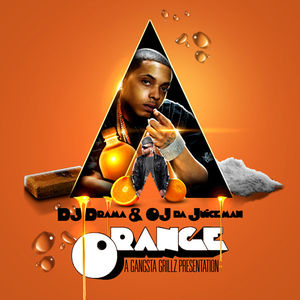
The Simpsons, among other representations of A Clockwork Orange
Though preceded by the Telharmonium and closely followed by such intriguing devices as the Ondes Martenot, Clavioline, Ondioline, the Theremin was perhaps the pre-eminent musical invention of the early twentieth century, one which continues to connote other states of mind and other worlds. A true product of the burgeoning Electronic Age, with the striking sight of the performer raising their hands to produce 'music from the ether', over succeeding decades the instrument's unique tones proved perfect for film-makers seeking to convey suspense, unease and, for science fiction purposes, alien beings and the mysteries of outer space.
Lev Sergeyevich Termen [Léon Theremin] was born in St Petersburg in 1896, and from an early age it was apparent that he had a natural gift for a variety of disciplines, from astronomy and physics to music. As a student at what was by then Petrograd Uniersity, he began to conduct experiments with high-frequency currents, magnetic fields and oscillators; though interrupted by the First World War, his research continued at the city's Physico-Technical Institute, where he eventually assembled an instrument, initially called the 'etherphone', which came to the attention of the very highest authorities in the fledgling Soviet state. Lenin himself became an enthusiastic advocate of the instrument, after it was demonstrated to him personally by Theremin in 1922; the head of the USSR, who famously stated that "Communism is Soviet power plus the electrification of the whole country", saw potential in linking this radical electrical invention to the wider revolutionary project. The inventor was accordingly dispatched on tour to advertise his innovation to the masses, enjoying free passage on the railways (themselves an emblem of the Soviet Union's growing technological power). On his return, he was able to capitalise on his prestige with further experiments, including producing the country's first fully-functioning television apparatus. In 1927, "a foreign extension of his agitprop barnstorming" was agreed, this time throughout Western Europe, and Theremin travelled to Berlin with a quartet of musicians from the Moscow Philharmonic Orchestra - and the blessing of the Soviet Intelligence Services.
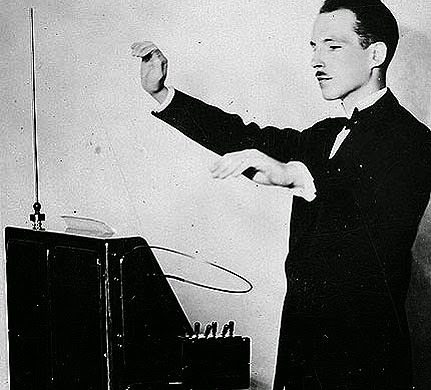
Theremin performing on the Theremin, c. 1928
Enthusiastically received in Germany and France, where many etherphone recitals were sold out, by the time he reached London Theremin and his 'magic' device were something of a sensation. He gave demonstrations at the Albert Hall and performed before Arnold Bennett and George Bernard Shaw, before finally sailing for New York at the very end of 1927. Along the way, the instrument’s name became interchangeable with that of its creator. The further he travelled, the further its status altered, from its Soviet origins as the ultimate democratic musical object, to a novelty ('no expertise necessary!', as its early American promoters boasted), and then an exclusive plaything of the rich. Theremin gave concerts with virtuoso Clara Rockmore at Carnegie Hall, and even after the Wall Street Crash of 1929 still harboured visions of achieving mass appeal – an RCA advertisement suggested ‘a Theremin in every home’, a bold ambition which sadly never came to fruition – the instrument’s main appeal was for electronics hobbyists. The most notable of these was Hugo Gernsback, an entrepreneur-publisher of popular science magazines such as Modern Electrics. Credited with the creation of the term ‘science fiction’ and popularising it through his ground-breaking genre magazines (beginning with the hugely influential Amazing Stories), Gernsback himself dabbled in inventing electronic instruments, including the ‘Pianorad’. Continuing Theremin’s lineage, Robert Moog, creator of the first modular synthesizer which bore his name, the Theremin of its day, purchased the ‘build-it-yourself’ instructions from one of Gernsback’s publications.
Poster advertising the first Theremin demonstration in the USA; New York, 1928
Though in his New York heyday, Theremin continued to entertain visiting dignitaries and enjoyed the patronage of various high society benefactors, the commercial success he had anticipated showed little sign of materialising, despite his diversifying into alarm systems and other electronic innovations. The Theremin had been adopted in the early 1920s by Soviet film composers, amongst them Shostakovich, (and in 1934 made an appropriate appearance in the score for the propaganda film Komsomol – The Patron of Electrification), and Hollywood was not long in embracing the instrument, reviving its popular fortunes. Connoting strangeness in every sense, its ethereal sounds soon became synonymous with not only disturbed states of mind – pioneeringly used by Alfred Hitchcock in Spellbound (1945) – but also other worlds; as such, it was ideal to be applied to science fiction film soundtracks: Rocketship X-M (1950), The Thing (From Another World) and The Day the Earth Stood Still (both 1951) are among the earliest examples. The subsequent ubiquity of the Theremin in the genre meant that by the time of Tim Burton's 1996 sci-fi homage, Mars Attacks, its inclusion by composer Danny Elfman was regarded as playful parody.
Footage of Theremin in later years, accompanied by his daughter Natalia
Whilst the instrument that bore his name became ever more established in the popular culture of the West, the events of his own life, shrouded in mystery and containing fantastic elements, have been exhaustively recorded by biographer Albert Glinsky in Theremin: Ether Music and Espionage and re-imagined in the 2014 prize-winning novel Us Conductors by Sean Michaels. After his return to the Soviet Union on the eve of the Second World War (whether voluntarily or not is still the subject of speculation, as the ever-vigilant Soviet Intelligence Services are likely to have kept a close eye on him throughout his Western adventures), Theremin’s technical genius was applied to the service of the state during the Cold War – namely, inventing devices for intercepting ‘enemy’ communications and spying – and he worked in seclusion over the following decades. On the fall of the Soviet Union, he re-emerged in the West, even making a triumphant return to New York in his dotage, an improbable event captured for posterity in a documentary released in 1993, the year of his death, Theremin: An Electronic Odyssey; an apt title for a man whose lifetime spanned two centuries, both World Wars and the entire Soviet era, and whose musical and scientific legacy remains relevant today.