Friday, 27 March 2015

Atomic Radio: Where Art Meets Science

ATOMIC radio was a six-part radio series, exploring the relationship between the arts and the science of X-ray crystallography, featuring conversations with artists, designers and scientists, new writing and original sound artworks.

I was intrigued by this approach, since many of my own interests stem from the convergence of science and fiction, albeit from the starting point of SF. Rather than looking for the science content in fictional works, episode 2 in the series considers the fictional elements in the invisible sub-microscopic world of crystallography. The founding of the science of X-ray crystallography by father and son team William and Lawrence Bragg, in 1913, led to the development of new techniques for studying molecular structures, which also involved the construction of large scale models. In the years after World War II, proteins, viruses and other molecules were being studied and modelled in greater detail and numerous different variations of the same structures were produced. This was prior to the 1953 determination of DNA by Watson, Crick, Wilkins and Franklin. The Hidden Structures Exhibition at the Science Museum (7 March 2013 to 1 January 2014) drew from its large collection of molecular models to celebrate the the history of these structures.

In the episode, an interview with the exhibition's curator, Boris Jardin, revealed that there are different ways of approaching the task of modelling thousands of atoms, and that it is a design problem as much as a science problem. Metal rods and plasticine were among some of the more unusual materials used. It was also interesting to hear about just how different models of the same molecules could turn out to be, as in the images featured here. Commenting on the task of representing atomic structures, Jardin paraphrased the famous biological illustrator, Irving Geiss, who said that fiction must be added in order to convey truth. In other words, a degree of invention is what can lead to scientific breakthroughs like the discovery of the structure of DNA.

The series was part of the Resonance 104.4 FM Science Museum residency and the 2014 International Year of Crystallography. The themes are based on Emily Candela's AHRC Collaborative Doctoral Award research between the Royal College of Art and the Science Museum.

Wednesday, 11 March 2015

Book Review: Perfect World by A.J. Kirby

A. J. Kirby’s novel Perfect World envisages what such a world might consist of – and examines the reasons it always falls short of perfection. Through the eyes of journalist Toby Howitt, at once world-weary and out of his depth, the plot develops via meetings with God, the disillusioned creator of Perfect World, and excursions into His artificial version of reality. Set in the Cornish gardens of Eden and Elegant, the Biblical allusions extend to characters named Addam and Eva and touches on the Fall of Man, with a modern twist. Kirby tackles themes of lost world(s), and alternate realities through a series of fast-paced adventures. The book’s central premise is the merging of Real and Virtual worlds, seen through the prism of a ‘second life’ lived through an avatar – the Perfect World of the title – and how that impacts on human relationships.

Using the near-future setting, Kirby hints at the inevitability of ecological disaster and critiques social inequality (in both worlds) – “capitalism’s last stand” – in the rich tradition of ‘dystopian’ science fiction. The action is continuous, the narrative entertaining, and the tone urgent throughout, and whenever the atmosphere threatens to become too oppressive, serious matters are often treated with humour. As a naive narrator, Howitt is both a strength, allowing the reader to see events as they unfold through his eyes, and at times a weakness, preventing a fuller exploration of the philosophical implications of the perfect world. The ignorance of the narrator drives the plot forward, but in this respect is also its limitation; it arguably restricts Kirby in actively pursuing the many ideas and issues raised.


The fundamental issue of communication – how people relate to one another when every laptop, mobile phone or tablet offers instant access to a safe, self-enclosed world (such as Second Life or virtual reality games) – is at the heart of this story. As Howitt initially explains, the primary advantage of this artificial environment is that it “... enabled me to live in a world in which I do not have to be myself”, with a wife he has never ‘met’, but he comes to realise that this apparent freedom brings its own restrictions. What seems the ultimate form of escape gradually unravels, and he eventually finds sanctuary in the ‘real’, the tranquil gardens and quiet countryside.

Recommended for fans of adventurous science fiction and anyone interested in new novels with contemporary themes.

This review originally appeared on the Leeds Big Bookend site.

Friday, 27 February 2015

Another Cover Without a Cause

Continuing the theme of hopelessly misjudged science fiction book covers, I recently picked up a copy of Richard Matheson's short story collection, Shock! As the author of I Am Legend, a regular contributor to The Twilight Zone, and the creator of the stories which were filmed as The Incredible Shrinking Man and Duel, Matheson was a multi-faceted and versatile writer, blending elements of science fiction, horror and fantasy to original effect. The 'shock' in his work is generally of a psychological nature. However, when British paperback imprint Sphere came to re-issue his early short story collection of that title, they commissioned cover art (by an artist who, perhaps wisely, remained anonymous) spectacularly lacking in subtlety: an axe splitting a bloody skull...


It transpires that a similar artistic formula was employed for the remaining story collections in the series, which can be viewed on the Vault of Evil blog. Matheson's response is sadly unknown.

Wednesday, 11 February 2015

Science Fiction Theatre: Postcard From Barcelona

The subject of this month’s post was selected based on a temporary move to Spain, and the ‘Postcard from Barcelona’ reference proved impossible to resist! The title is borrowed from episode 30 of the 1950s-60s American science fiction television series, Science Fiction Theatre, a forerunner to programmes like the Twilight Zone, also featured here in a recent post.

Hosted by the film actor and former war correspondent Truman Bradley, each episode would begin with a simple science experiment, related in some way to the theme of the show. The shadow of war loomed large in experiments that would demonstrate the power of electron beams or the destruction of model cities, but this was usually tempered by optimism about the potential scientific advances to be made. For example, the intro to Postcard from Barcelona focuses on the construction of solar powered space stations; Bradley comments, ‘solar power can give man a powerful weapon with which to destroy himself or it can give us scientific opportunities for discoveries that will benefit the world’.

The topic of the episode extrapolates from the idea that these space stations already exist and were built by aliens to collect scientific data about Earth. The mysterious postcards from Barcelona (perhaps a suitably exotic and alien location for 1950s America) are received by the scientist Dr Keller, found dead at the beginning of the story, who is described as ‘the greatest scientist of the age’. It transpires that both Keller’s ‘sub-quantum theory of the universe’ and the compound elements for a numerical wonder drug were posted to the doctor exactly a year before he announced them to the world. The episode ends with a final postcard, sent in the code language of cybernetics, from the life forms to whom Keller owes his discoveries. The mantle then passes to his daughter and two former colleagues to keep the secret of the alien space station orbiting Earth.

While the scientific content in the series was minimal by today’s standards, real-world technologies and scientific problems were often the point of departure for the stories. The wider popularisation of science in this period was influenced by the craze for hobbyist magazines, which would usually also publish SF (described then as scientific fiction). Titles such as Modern Electrics, Electrical Experimenter and Amazing Stories, published by Hugo Gernsback in the 1930s, were later followed by a proliferation of anthologies and cheap paperback novels during the post-WWII publishing boom. The ascendency of television in the 1950s explains the emergence of a series like Science Fiction Theatre as part of this trend.

It's not surprising, then, that in the re-imagining of 1950s America in Back to the Future, Science Fiction Theatre features as George McFly’s favourite TV programme...


Monday, 26 January 2015

Covers Without a Cause: SF Cover Illustrations

To complement the surreal selection of 70s SF album covers from earlier this month, I decided to post on SF book covers... with a twist. The titles I’ve chosen are ones where the subject depicted on the front of the book has little, if any, resemblance to the story of the novel. It’s a problem that’s plagued pulp fiction generally but particularly SF; the mass production of cheap books from the 1940s onwards demanded a high turnover of titles, with publishers’ in-house artists usually working to a brief following the established formula of spaceships and aliens. However, the passage of time has given some of these books a certain charm, or at least enough entertainment value to raise a smile.

The three covers featured here are a somewhat piecemeal selection, and the tip of the iceberg in terms of the SF genre but a good starting point that will perhaps spawn a sequel post. Here goes...


1. Dagon and Other Macabre Tales by H.P. Lovecraft. Highly influential in the SF, fantasy and horror genres, the stories of Lovecraft offer plenty of terrifying visual fodder, or so you might think. The cover design for this Mass Market Paperback edition (1985) of his collected short stories shows an odd, brown scaly creature (not, to my memory, resembling anything in the stories) sitting on top of an unconvincing pile of disembodied heads. Maybe the artist assumed the title was a typo, since the creature’s appearance is definitely more dragon than Dagon.


2. The Hospital Ship by Martin Bax. The first (and only?) novel by the writer and consultant paediatrician, Bax’s experience as a doctor informs this tale of post-apocalyptic societal collapse. The hospital ship of the title sails around picking up casualties of recent wars, a futile undertaking that does little to mitigate the impending global disaster. Clearly, it’s a gloomy theme, and one that could use some help exciting a reader’s attention. So it’s the old sex sells cliché that kicks in for the Pan Books edition (Picador imprint, 1977). Even allowing for the tenuous link to the practice of ‘love therapy’ in the novel, the cover (and the covergirl) are pretty wide of the mark. And if you bought the book for the cover alone, you were bound to be disappointed with the contents.


3. The Caltraps of Time by David I. Masson. The writer and former Curator of the Brotherton Collection (University of Leeds) was the subject of a former post, in which you can read more about his life and this, his only published collection of short stories. Suffice to say, these tales of curious features of language and temporality are not well served by the book cover in this New English Library edition (1976). It is, of course, a classic case of ‘safe SF design’ (when in doubt, draw a spaceship). I’m sure it saved many a tortured conversation about how to visually represent time, phonology or linguistics but it doesn’t do justice to the original and inventive themes in the stories.

Wednesday, 14 January 2015

Science Fiction-Music Interconnections: 1970s Spaced-out Album Covers

A Journey through Space and Time in 10 Cosmic Album Covers of the 1970s.

A personal, but by no means exhaustive, selection – in chronological order:


From Germany, Tangerine Dream - Alpha Centauri (71)

From Germany, Tangerine Dream - Zeit (72)


From the UK, Pink Floyd - Dark Side of the Moon (73)


From Germany, Can - Soon over Babaluma (74)


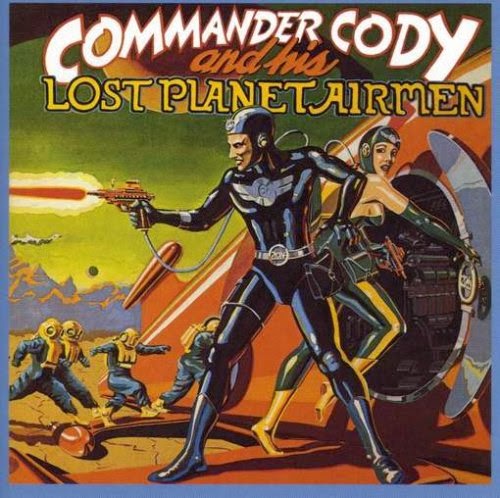
From the US, Commander Cody and His Lost Planet Airmen (75)


From Japan, Far East Family Band - Parallel World (76)
 

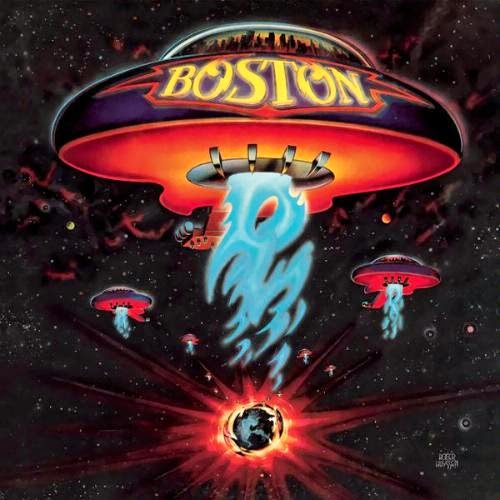
From the US, Boston [first album] (76)
 

From Canada, Rush - 2112 (76)
 

From the UK, E.L.O. - Out of the Blue (77)
 

From France, Jean-Luc Ponty - Cosmic Messenger (78)

Monday, 29 December 2014

Do Communists Dream of Electric Shepherds?

In spite of much sci-fi being inspired by leftist politics, the influence is not obviously mutual. The utopian visions of the future so common among 19th century socialists have been rolled back by successive generations of dour ‘scientific’ pragmatists who have accommodated the dreams for the future to the demands of the moment. Today, with the far left generally unable to influence the tenor of political life and a technologically driven ecological disaster beckoning, it is perhaps unsurprising that faith in the future and of human beings’ capacity to use technology for the benefit of all is at a low point.

Rallying against this state of affairs, and following on from the accelerationist manifesto, lefty ‘media platform’ Novara Media has begun to take seriously the question of what the future might look like. So far, the group’s weekly video slot, IMOBastani, has proffered two dystopian visions of how capital might reproduce itself in the future (clue: it’d be bad) and one socialistic alternative predicated on the use of automation to largely eliminate the need for alienated labour. This has inspired a self-consciously sci-fi response, reflecting on the post-capitalist universe depicted in Star Trek. As far as I can see, no critique of the Novara perspective from a curmudgeonly ultra-left yet loveably tweedy medievalist perspective has emerged in the month or so since these pieces were published, so here’s one from 1889. In sci-fi, socialism, as in life: nothing changes and nothing stays the same.